
What mistake costs sellers the most money?
Insight
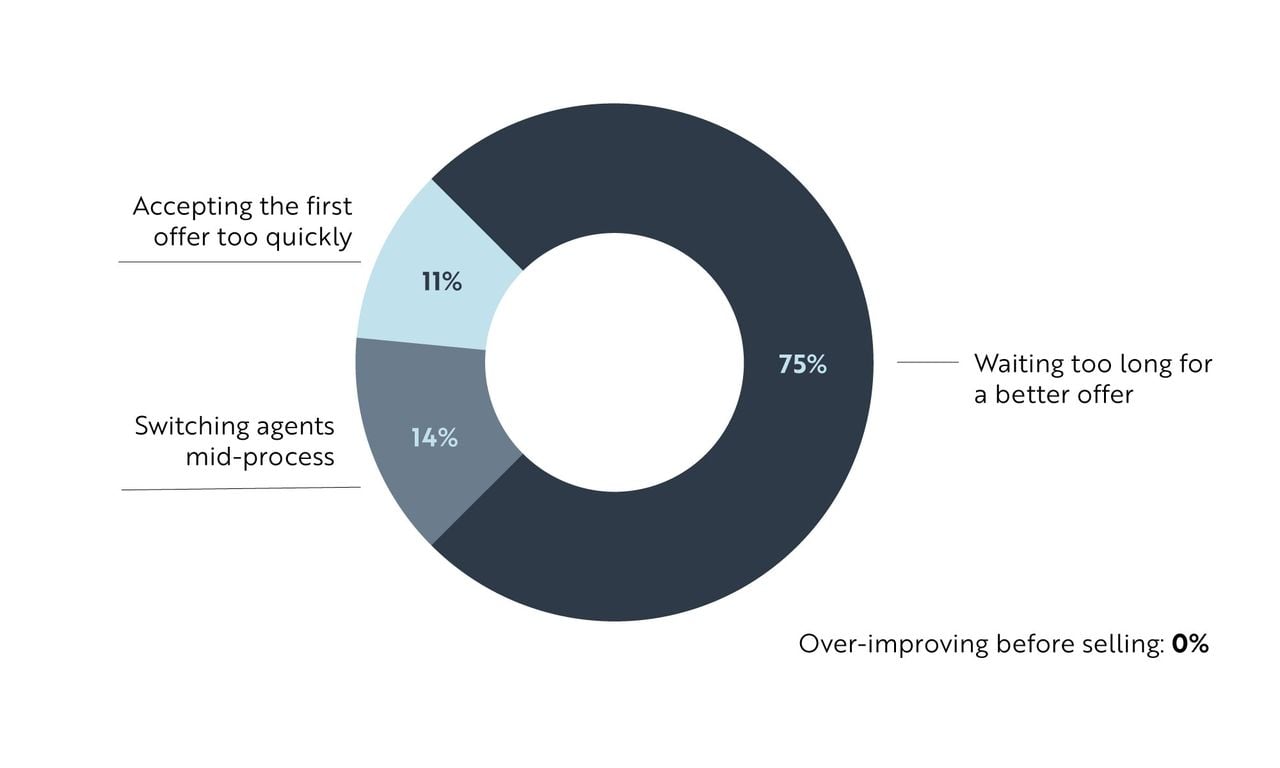
When asked what mistake costs sellers the most money, the response was decisive: waiting too long for a better offer dominated the results at 75%. Far fewer respondents pointed to switching agents mid-process or accepting the first offer too quickly, and no one selected over-improving before selling.
In recent years, stories of record-breaking sales often overshadowed the quieter reality of listings that sit and lose momentum. But these results suggest that in today’s market, the greater perceived risk is not accepting too little, but waiting for something better that may never come.
What Most People Miss
It’s true that accepting the wrong offer too quickly can cost money. But what many sellers underestimate is the cost of hesitation.
When a property first hits the market, it captures the highest level of attention it will likely receive. The strongest buyers, the ones who have been waiting, often act early. If those offers are dismissed too quickly in search of something better, momentum can shift. Days on market increase, buyer perception changes, and negotiating power weakens.
The irony is that waiting for a better offer can sometimes create the very outcome sellers are trying to avoid. The market rarely rewards uncertainty. It rewards alignment, pricing, presentation, and timing working together.
In a negotiation, what usually has the most power?
Insight
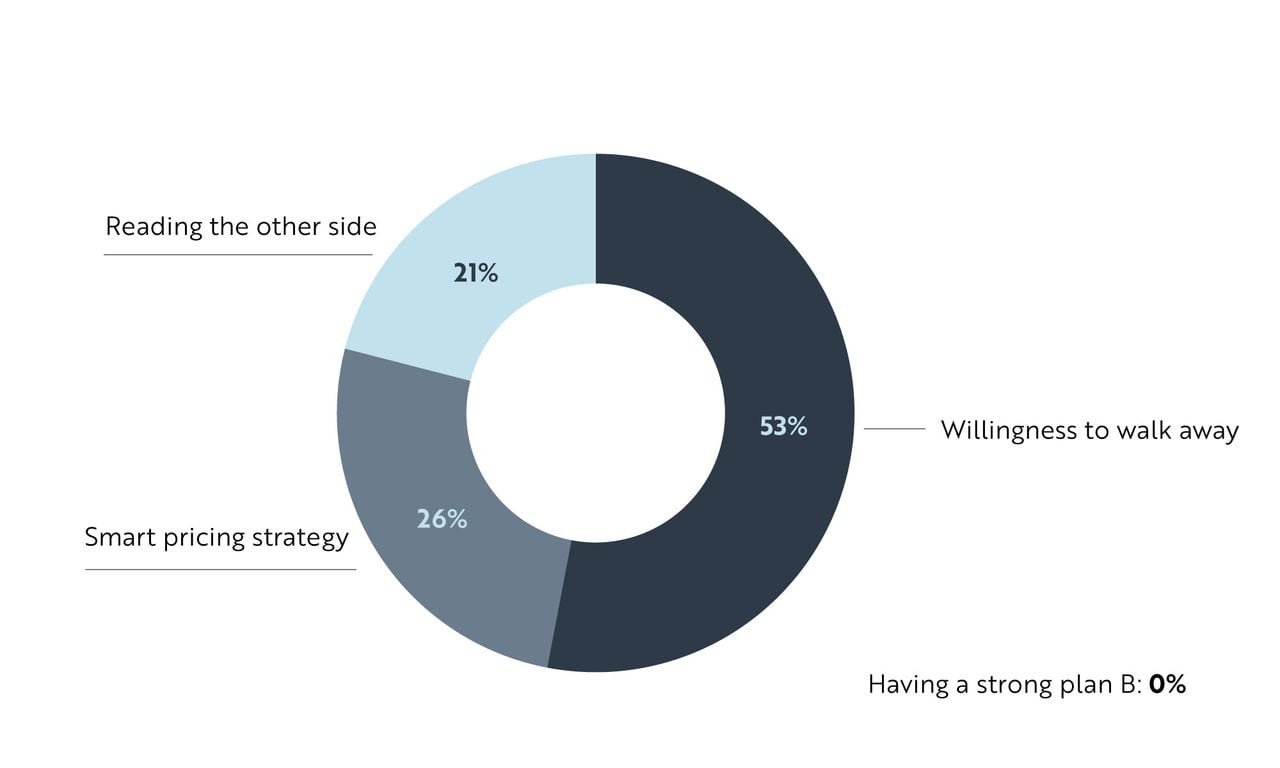
When asked what holds the most power in a negotiation, the majority chose willingness to walk away, capturing 53% of the vote. Smart pricing strategy and reading the other side followed behind, while having a strong plan B received no support.
The result highlights a widely held belief: leverage comes from detachment. The ability to walk away signals confidence and reduces desperation, two factors that can significantly influence outcomes. In competitive markets, that posture often shifts the dynamic immediately.
But the absence of support for a strong plan B is notable. It suggests that many people see power as a stance rather than a structure.
What Most People Miss
Walking away is powerful, but only if it’s real.
A seller who says they are willing to walk away but has no alternative strategy is not negotiating from strength. They are negotiating from hope. True leverage comes from having options that are credible and executable.
The irony is that a strong plan B often makes it easier to stay at the table calmly. When you know your alternatives, you negotiate with clarity instead of emotion. That steadiness is often more persuasive than a dramatic exit.
The real power in negotiation is not the threat to leave. It is the confidence that no property is truly irreplaceable. If you walk away, another opportunity will come, and it may fit your needs even better. With that clarity, you negotiate differently.
Header image courtesy of Jordan Lederman and Alexandra Gonzalez. 11111 Killian Park Road, Pinecrest, FL. View property here.
Poll conducted across Fortune Christie’s social media platforms in 2026. Responses include buyers, sellers, and agents.